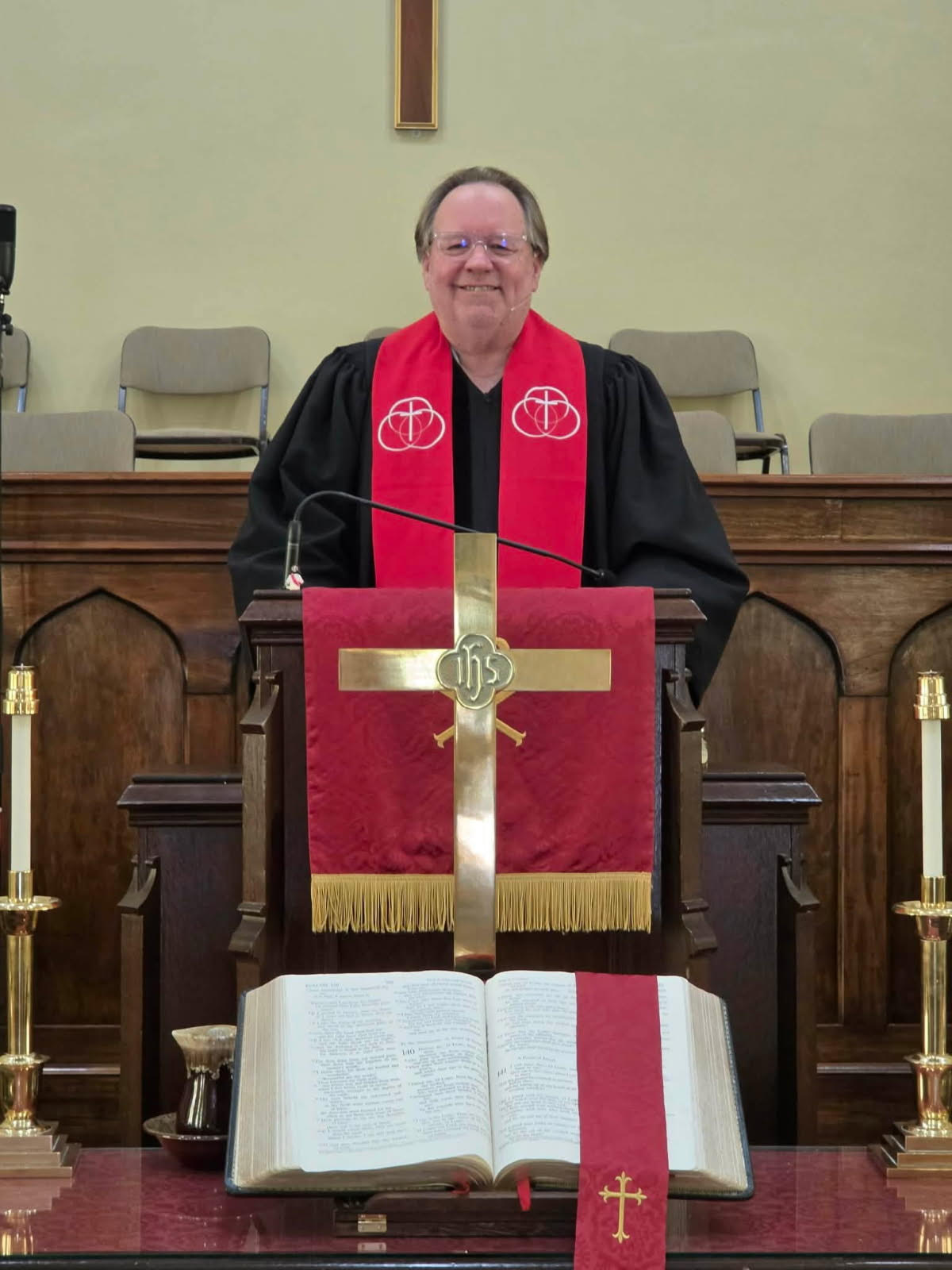
Sermon Series = “Our Summer in Rome”
Romans 10:5-15
“The Word is Near You”
When we were last with our tour guide, the Apostle Paul, he was lamenting about his Jewish brothers and sisters who were choosing not to believe in Jesus as the Jewish Messiah. To be completely honest Paul was guilty of this same stance, when he was known simply as Saul, before his trip down the Damascus Road which you can read about in the 9th chapter of the Acts of the Apostles.
Many have probably asked the question: How could God reject Israel after having once selected her? Obviously, this issue gave Paul great pain as it had Jesus before him.
Paul described God’s choosing of Israel in the Old Testament as adoption. Theirs was the adoption—the positions as sons and daughters of God. They had the glory—God’s visible appearance in their midst. They had been given the covenants—God’s special, oath-bound agreements relating to salvation and well-being—were theirs. The law was given to them to guide and instruct them in their way of life. They had divinely instituted orders of service with which to worship God properly. And the promises of God belonged to them.
Paul expressed concern for his fellow Jews by saying that he would willingly take their punishment if that could save them, while the only one who can save us in Christ and our belief in Him. Paul showed a rare depth of love. Like Jesus, he was willing to sacrifice his life for others. How concerned are you for those who don’t know Christ? Are you willing to sacrifice your time, money, energy, comfort, and safety to see them come to Christ?
Our text for this morning is listed in your bulletin as Romans 10:5-15 but in order to give our lesson some context I’m going to begin with the first verse of chapter 10. After all, as Dr. Ben Witherington of Asbury Seminary is famous for saying, “A text without a context is just a text that says what you want it to say.”
Romans 10:1-15
A woman had two little boys who were driving her to the edge of despair [ever been on that edge yourself?]. They were into everything, non-stop. And they were mischievous as well.
One day she decided to take them to her pastor. Maybe he could succeed where she had failed. The pastor wanted to see the older boy first. The younger one sat outside. The older boy was frightened. The minister looked so distinguished or extinguished in his black robe on Sunday. What would he be like one-on-one?
The minister, a kindly man, looked at the young fellow somberly, then asked, “Young man, where is God?” The boy had no idea what to say, so he sat in silence. The minister repeated the question, “Young man, where is God?” The boy still said nothing. The pastor thundered one last time, “Young man, I said, ‘Where is God?’”
The boy jumped out of his chair, ran from the room, grabbed his little brother and raced from the church. He shouted, “Bobby, they’ve lost God and they’re trying to pin it on us.”
We live in a world that has lost God, and we’re not even sure where to pin the blame.
Let’s consider our treatment of the Christian Sabbath. Once, when a lot of us were younger, there were laws, “Blue Laws,” that said businesses couldn’t be open on Sunday. Those laws have long since been repealed. Then businesses began opening at 1:00 pm, leaving time for their employees to worship if they were so pleased. In many communities, including ours, that option is no more. In most areas stores make no distinction between Sunday and the rest of the week.
And it’s not only the stores in our communities that make no distinction between Sunday and the rest of the week. Buddy Cooper, once a D.S. in our old denomination, tells the story about a family who stopped attending Sunday worship. He went to visit them and asked why. They told how their son was playing soccer and how at first, practice was on Sunday but eventually games were on Sunday and the whole family enjoyed supporting him. He’s pretty good is what the parents said, Buddy said, “He’s not that good.”
For many, church and worship attendance has become an afterthought. Folks only go to church if they haven’t got anything better to do.
The prayer walk for our schools was last week. I was out of town and not able to attend but was told beforehand that folks were no longer able to leave
“Post it” notes on classroom doors with thoughts and prayers on them. Someone in the school has complained about Christian inference. I’ve also heard rumors about the Fellowship of Christian Athletes [FCA] and how much influence they will be entitled to. But hey, if they’re complaining about Jesus getting in their way we must be doing something right!
The Old Testament law remains the Word of God, “Keep my decrees and laws, for the person who obeys them will live by them, I am the Lord, [Leviticus 18:5], but with the coming of Jesus we now understand its real purpose—to show us that it cannot save us and point us to the only One who can save us, Jesus Christ. This doesn’t make the Old Testament laws irrelevant; they continue to teach us about God’s character and how we are to live as followers of God.
In order to be saved by the law, a person would have to live a perfect life, not sinning once. Why did God give the law, knowing people couldn’t keep it? According to Paul, one reason was to show people how guilty they are: “Why, then, was the law given at all? It was added because of transgressions until the Seed to whom the promise referred had come. The law was given through angels and entrusted to a mediator” [Galatians 3:19].
The law was a shadow of Christ—that is, the sacrificial system educated the people so that when the true sacrifice came, they would be able to understand His work: “The law is only a shadow of the good things that are coming—not the realities themselves. For this reason it can never, by the same sacrifices repeated endlessly year after year, make perfect those who draw near to worship” [Hebrews 10:1]. The system of ceremonial laws was to last until the coming of Christ. The law pointed to our need for a Savior.
Paul adapts Moses’ farewell challenge from Deuteronomy to apply to Christ, who has provided our salvation through His incarnation [God taking on human form] and resurrection. “No, the word is very near you; it is in your mouth and in your heart so you may obey it” [Deuteronomy 30:14]. God’s salvation is right in front of us. He will come to us wherever we are. All we need to do is to respond sincerely and accept His gift of salvation. The “deep” used here refers to the grave, or Hades, the place of the dead.
Have you ever been asked, “How do I become a Christian?” Verses 8-12 of our lesson this morning give us a beautiful answer. Salvation is as close as our own lips and heart. People think it must be a complicated process, but it is not. If we sincerely believe in our hearts and profess Jesus Christ as the risen Lord, we will be saved.
The gospel—yes, the whole gospel, in all its essence and entirety—comes down to these two historical and eternal statements: [1] Jesus is Lord, and [2] God raised Him from the dead.
For sure there is more that could be said but this is enough. These aren’t magical words, but they are profoundly miraculous. They carry the very essence of salvation.
Paul is trying to bring Scripture to its fulfillment by building up the ancient people of God into a nation favored and blessed by God—through whom the whole world would be blessed. Paul is trying to spread scriptural holiness across the land so that the glory of God could be known in the world; Paul is trying to save the world!
How do you save the world? The same way you eat an elephant—one bite at a time. Paul’s first and major challenge here in Rome is that of uniting the Jews and the gentiles into one big happy family under the lordship of Jesus Christ. To ditch the idea of “works-based righteousness” and replace it with “faith-based righteousness.”
“If you declare with your mouth, ‘Jesus is Lord,’ and believe in your heart that God raised him from the dead, you will be saved. For it is with your heart that you believe and are justified, and it is with your mouth that you profess your faith and are saved.”
In World War II, one of the boldest and most dramatic decisions in all naval warfare was made by Admiral Marc Mitscher in the Battle of the Philippine Sea. Late in the afternoon of June 20, 1944, Mitscher had dispatched a late afternoon bombing mission against the fleeing Japanese fleet.
It was pitch dark when the first of the flyers began returning to their carriers. But with the fleet under strict wartime blackout regulations and the pilots’ fuel supplies running dangerously low, many of the flyers would never find their way back to their carriers.
Admiral Mitscher took a calculated risk. He turned on the lights. One returning flyer described the scene as a “Hollywood premier, Chinese New Year’s, and Fourth of July all rolled into one.” For two hours the planes landed. Some 80 pilots, weary and out of gas, ditched in the sea but relatively few were lost.
To a community where many are still in spiritual darkness, to a country and world where many likewise are still unaware or unconcerned about Christ’s love and forgiveness, or consider it irrelevant or unnecessary, let us dedicate ourselves to TURN ON THE LIGHTS. The saving light of the glory of God in the face of Jesus Christ. If God is known in our land and in our community, it will be because there are persons who confess with their lips that Jesus is Lord.
We must take God’s great message of salvation to others so that they can respond to the gospel. How will your loved ones and friends hear it unless someone tells them? How is God calling you to play a part in making His message known in your community? Think of someone who needs to hear about Jesus and of something you can do to help that person hear it. Then take that step as soon as possible. Let’s be the ones who TURN ON THE LIGHTS!
 Eastman First Methodist Church