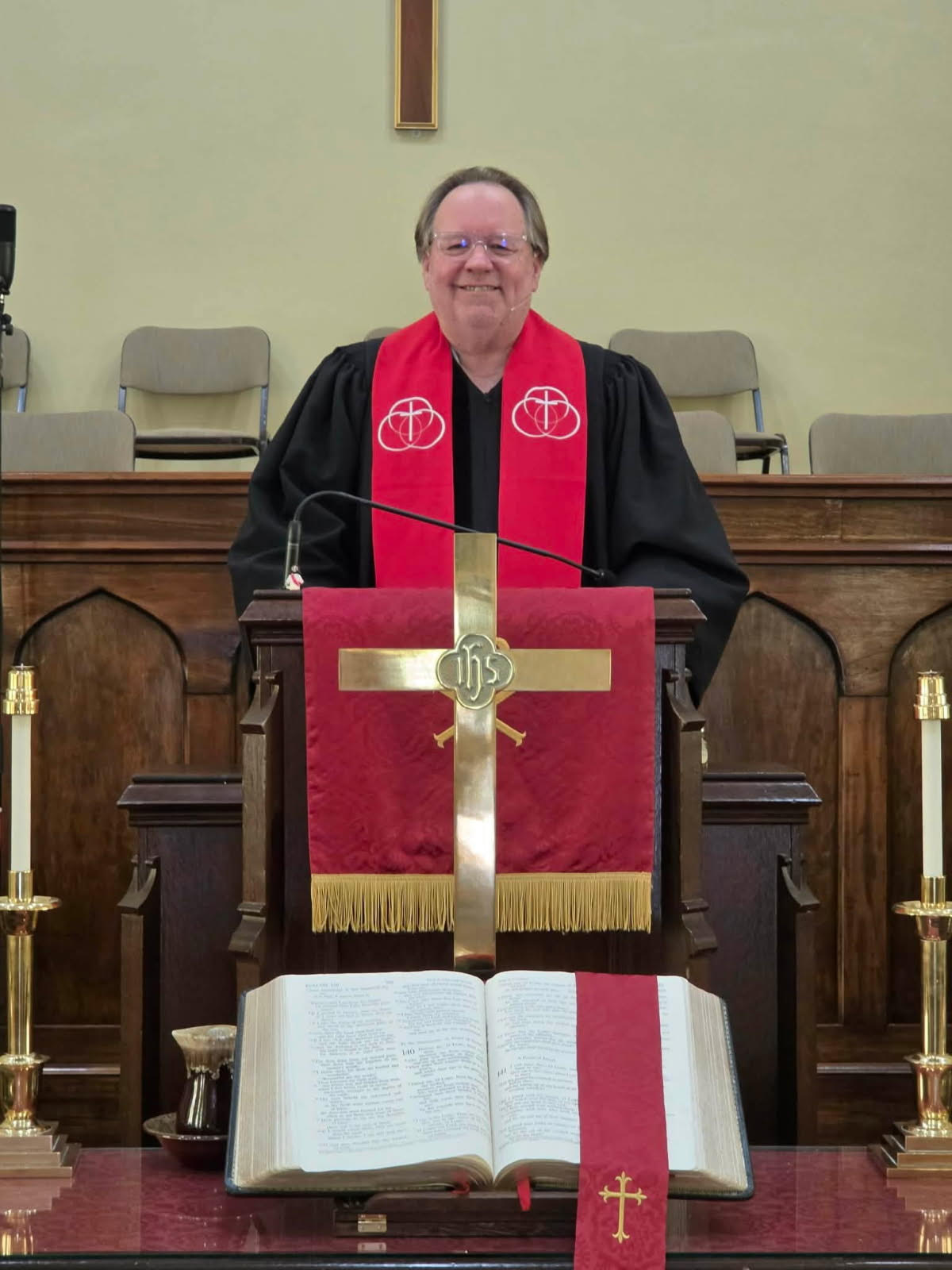
Sermon Series: “Our Summer in Rome”
Romans 6:1b-11
“United With Him in Resurrection”
For the next twelve weeks we will be walking through Paul’s letter to the Church in Rome in a sermon series I’ve titled: Our Summer in Rome. We will be taking a deep dive into what is the longest and most intensely theological of the 13 New Testament letters written by Paul. This letter is also the most significant in the history of the church. Martin Luther was studying Romans when he concluded that a person becomes righteous in the sight of God through faith alone. His discovery led to the Reformation battle cry, sola fide, “by faith alone.”
Like my spiritual coach John David Walt likes to say: “We have rented an RV, we have purchased our provisions, we have made all the arrangements, and we are going to make camp right here.” But before we get started, I thought it would be beneficial for me to lay a little groundwork.
After Pentecost, the early church was growing in leaps and bounds and maybe suffering a little from what could be called “growing pains.” It’s recorded that following Peter’s fiery sermon on that day 3000 were added to their number. At the end of Acts 2 it says, “the Lord added to their number daily those who were being saved.”
By the time we get to Acts 6 the Hellenistic Jews were complaining to the Hebraic Jews because their widows were being overlooked in the daily distribution of food; so, the Twelve, not wanting to neglect the ministry of the Word to wait on tables decided to choose seven men full of the Spirit for these duties. One of those men selected was Stephen, a man full of God’s grace and power who performed great wonders and signs among the people. Strange as this may sound, opposition to Stephen arose. In the Bible and life for that matter, it seems like every time something good comes along there is opposition. But those who opposed Stephen couldn’t stand up against the wisdom the Spirit gave him as he spoke. So, very similar to what Jesus faced, they made stuff up about him. My first appointment was in a small rural town, and it was said that everyone knew everything about everybody in the town and if they didn’t, they just made stuff up.
Acts 7:54-8:3
This takes us to Acts 9 where Saul, still breathing murderous threats against the Lord’s disciples was on his way to Damascus to imprison any found to be belonging to the Way, what Christians were called at this time. Of course, we all know what happened on the road to Damascus and Saul’s conversion, from then on referred to as the Apostle Paul, who authors the letter that we will spend the next couple of months dissecting.
Rome during the mid-1st century was the capital of the Roman Empire and a city of immense wealth and outward splendor. The city had grown far beyond its early republican boundaries, with apartment buildings housing the lower classes and grand palaces on the Palatine Hill for the emperors and elite families.
Rome had a population estimated at around one million people, including a substantial Jewish community. The city was diverse, with residents from across the empire, including Greeks, Jews, and other provincial people. This diversity shaped both the social and religious life of the city, creating a complex environment for early Christians.
The city was dominated by pagan temples and rituals. Many of the early Christian churches were later built atop the ruins of these temples.
There is a general agreement that Paul wrote this letter at Corinth during his three-month stay in Greece, between 56 and 58 A.D., just prior to his return to Jerusalem from his third so-called missionary journey. One of the purposes of his trip to Jerusalem was to deliver an offering he had been collecting for the mother church [he was still trying to get the big shots in Jerusalem to like and trust him]. I guess even back then nothing spoke louder apparently than money.
The purpose of this letter was for Paul to introduce himself to the church in Rome which had been started by some Jews following Pentecost. They had spread the gospel on their return to Rome and the church had begun. Paul had heard of the church but had not yet been there, nor had any of the other apostles. You may find it interesting that both Paul and Peter were martyred in Rome. Peter was crucified upside down [his choice] on a cross and Paul was beheaded.
Although many barriers separated them, Paul felt a bond with these believers in Rome. They were his brothers and sisters in Christ, and he longed to see them face-to-face. Though he had never met the believers there he loved them. At this time, in this city of a million or more residents, the church that Paul was writing to consisted of about 150 people.
Romans 6:1b-11
“Congratulations, today’s your day. You’re off to great places. You’re off and away. You have brains in your head. You have feet in your shoes. You can steer yourself any direction you choose.” The rhythmic words of advice from a delightful little book that makes an annual appearance this time of year by Dr. Seuss titled, Oh, the Places You’ll Go!
“You’re on your own,” he continues. “And you know what you know. And YOU are the one who’ll decide where you go.”
It’s up to us, says Dr. Seuss. The world is ours and we are free to choose what kind of life we will have. He even provides a warning: “You’ll look up and down streets. Look’em over with care. About some you will say, ‘I don’t choose to go there.’ With you head full of brains and your shoes full of feet, you’re too smart to go down a not-so-good street.”
Don’t you wish that were true? I wish we only went places our brains told us to go and we always made rational choices. I read a story about a minister who asked a person he was counseling if he had any trouble making decisions. The man answered, “well, yes and no.”
The word intelligence comes from two words, inter, meaning “between,” and legere, meaning “to choose.” An intelligent person is one who has learned to choose between good and evil, truth and falsehood, love and hate, gentleness and cruelty, humility and arrogance, and life and death.
In other words, “You’ll look up and down streets. Look’em over with care. About some you will say, ‘I don’t choose to go there.” As one preacher said, “God always votes yes, the devil votes no, and your vote decides the election.”
Professional speaker Phillip Wexler notes that the human being is the only creature on earth that is not the prisoner of its programming but is the master of it. Birds are programmed to fly south in the winter. They don’t suddenly decide that because of the bad economy they had better stay home this year. Beavers build dams. Fish swim in schools. Only humans decide to build a dam or go back to school. We have the power to decide. That doesn’t mean, of course, that we always make good decisions. Life is about choices, that’s where we want to begin today.
“Shall we go on sinning so that grace may increase?” Many have wondered where so ridiculous a question could have arisen. I think before we can move forward, like many times before, we need to go backward in our reading to understand the question.
Romans 5:12; 17-19
If God enjoys forgiving us so much, should we give Him more to forgive? Wouldn’t this please Him? Paul strikes down this notion that we can continue in sin and yet have abounding grace. The two are irreconcilable opposites. We must die to sin to be alive to Christ. Faith cannot become salvation until we turn from sin and turn toward God!
To be buried with Jesus indicates that death has already occurred in our relation to sin. Death to sin doesn’t come by the water of our baptism. Rather, water, as burial, testifies to the death that is already a fact. The water is just a symbol.
As wonderful as the death to sin is, there is a more glorious fact in focus here. In nothing has the splendor of God’s power revealed so much as in the resurrection of Jesus. I don’t care what you are facing in life right now; the best news I can give you is that we share not only in Christ’s death but also in His resurrection and His life. If we truly share in His death, we can equally share in His resurrection—not only in the future age but right here and right now in our new life consecrated to Him.
Our old self, the person we used to be before becoming Christians, is displayed not only in a symbolic death but in a real death to sin in union with Christ.
Concerning Christ’s resurrection, we know this—He will never die again. His episode of sin-bearing, death, and resurrection is never to be repeated. And if we are in Him, death can never touch us again.
Paul wrote to the Corinthians, “Do you not know that your bodies are temples of the Holy Spirit, who is in you, whom you have received from God? You are not your own; you were bought at a price. Therefore honor God with your bodies” [1 Corinthians 6:19]. It’s not the body that is destroyed. It’s the tenant that’s changed. When the sinful man is gone, sin is gone. The righteous man does not let his body be a slave of sin. He presents himself or herself as a servant to righteousness.
When we fully dedicate ourselves to God and believe in our cleansing and filling, the remains of sin in our heart are gone and we are filled with God. Brothers and sisters, when we are filled with God there’s no room for anything else!
All this is ours, not by works, not by something we can purchase or achieve. It, just like justification, is by faith. Only our response is needed.
Pastor Tommy Barnett tells a revealing story about an encounter he had with Elvis Presley, the King, many years ago. Elvis was in the congregation at the church Barnett served. Elvis seemed moved by one of his sermons and asked to talk to Barnett afterwards. Elvis knew that he needed to repent of his lifestyle and return to his Christian faith. But the allure of show business was so strong that he felt like he had no choice but to keep going in the same direction. With tears rolling down his face, Elvis asked, “What if I renounce show business and find that serving God won’t bring joy to my heart?” Sounds like a sensible question, doesn’t it? Of course, we all know what Elvis chose and what that decision did for him.
Choosing Jesus invariably helps us make better choices. That’s one reason the Christian faith has stood the test of time. When people give their lives to Christ they become better parents, they become better citizens, they live happier, more fulfilled lives.
But I need to say this. It happens only if you make your faith the most important part of your life. It works only if you take your faith seriously. I’m not being judgmental here. Studies show that people who only show up at church occasionally, who only have a causal relationship with God, who choose to be a spectator rather than an apprentice, are as clueless as everyone else about what it takes to have a fulfilling life. They make the same bad choices, they have the same emptiness, as the world outside. Only when Christ becomes a real presence in our lives do the benefits of faith show themselves. The words “servants of God” may rub us the wrong way, but they emphasize the completeness of the commitment that is required.
The Missing Messiah by Kyle Idelman and Mark E. Moore
“Congratulations, today’s your day. You’re off to great places. You’re off and away. You have brains in your head. You have feet in your shoes. You can steer yourself any direction you choose.” With God’s help, you can!
 Eastman First Methodist Church